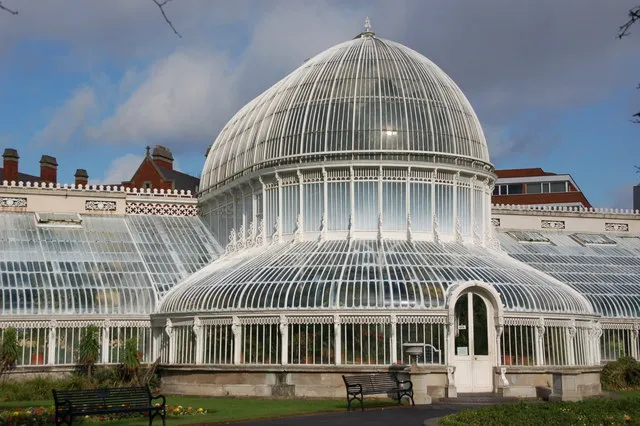
The Roof Over the Sofa: Cleaning Conservatory and Orangery Glass Properly

Photo: Georg Pik, CC0, via Wikimedia Commons
Every conservatory has the same blind spot. The glass at eye level gets wiped over now and then because you notice it. The roof — the big, sloping, slightly-out-of-reach bit that actually lets most of the light in — gets left alone for years, until someone glances up in February and realises the whole thing has gone a soft, muted green.
It's not laziness. It's access, mostly. But a grubby roof does more than look tired: it cuts the light, it holds damp against the glazing bars, and it makes the whole room feel colder and gloomier than it should.
Why Conservatory Roofs Go Green So Fast
A conservatory roof is basically a solar panel for algae. It's tilted towards the sky, it stays wet for hours after rain, it collects pollen, bird lime and the fine grit that blows off roofs and roads, and much of it faces north or sits under a tree. Green algae and moss love all of that.
Then there's the water itself. If the roof is rinsed with a hosepipe and left to dry, the minerals in hard water stay behind as a film. Repeat that a few times a season and you get the chalky, cloudy patches that people mistake for damaged glass. On polycarbonate they show up even more, because the surface is softer and slightly textured to diffuse the light.
One thing worth separating out: condensation on the inside of roof panels isn't dirt. If water is pooling in the glazing bar channels on the inside, that's a ventilation or sealing problem, and no amount of cleaning will fix it.
Glass and Polycarbonate Are Not the Same Job
This is where a lot of damage happens. Glass panels with a self-cleaning coating will shrug off rain for years — but scrub them with an abrasive pad or a stiff brush and you've taken the coating off, permanently. After that they get dirty faster than ever.
Polycarbonate is softer still. It scratches with a gritty cloth, it crazes and yellows with age and UV, and it goes brittle. Solvent-based cleaners, strong bleach and anything abrasive will cloud it. What it wants is plenty of water, a very soft brush and a mild detergent at most, worked from the ridge down and rinsed before it dries.
Moss in the glazing bar channels needs clearing out by hand, not just washed along the roof, or it simply reseeds itself in a fortnight.
The Access Question — and Why Ladder-Only Is a Red Flag
Conservatory roofs are not designed to be walked on. The glazing bars and panels will not take a person's weight, and the panels can crack without much warning, especially older polycarbonate that has gone brittle in the sun.
Leaning a ladder against a conservatory is worse than it looks. The gutter is usually plastic and not built to carry any load, the fascia is decorative, and the base can slide on paving. Even if you get up there safely, you still can't reach the ridge line or the far side of the roof, so you end up doing half a job from an unsafe position.
So when a cleaner says they won't do a ladder-only conservatory roof, that's usually a good sign rather than a bad one. It means they've thought about the Working at Height Regulations, and about what happens if a panel gives way. A sensible operator will either quote for proper access — a small tower scaffold, podium steps, or a water-fed pole with enough reach for lower and single-storey conservatories — or politely pass on the job.
What a Fair Quote Should Cover
Ask what's included before you compare prices, because conservatory roof quotes vary enormously in scope:
- The access method, and whether scaffold or tower hire is inside the price or added on top.
- Exactly what gets cleaned: roof panels, glazing bars, the frames, the gutters, finials, and the box gutter where the conservatory meets the house.
- The water being used. Purified water dries clear; tap water leaves the film you're trying to remove.
- Moss and debris removal from the channels, and where that debris goes.
- Realistic expectations. Limescale that has etched into glass, UV yellowing in polycarbonate and scratched panels won't come back — a good cleaner tells you that before they start, not after.
- Public liability insurance, and a clear plan for what happens if the weather turns.
A suspiciously cheap quote usually means a ladder, a bucket and a hosepipe.
If You're Tackling It Yourself
There's no shame in doing it, provided you stay off the roof and stay off the ladder. A long-reach pole with a soft brush, a hose, a mild washing-up solution and plenty of rinsing will get most of the green off a single-storey conservatory from the ground. Work from the top down, keep the surface wet, and rinse thoroughly at the end.
What not to do: pressure wash it (it lifts seals, drives water into the glazing bars and scratches polycarbonate), scrub with a scouring pad, use bleach on plastic panels, or climb onto the roof at all.
Keeping It Clearer for Longer
A roof that's cleaned once a year in late spring, after the pollen has finished, tends to stay presentable far longer than one cleaned in a panic before a family party. Cut back anything overhanging — a branch above the ridge is a moss farm with a delivery system. Clear the gutters so rainwater drains away instead of sitting against the bars. And if the moss keeps returning to one corner, deal with that patch properly rather than washing the whole roof every few months.
It's not a window, this roof of yours. But it's the reason the room works, and it's worth looking up at now and then.