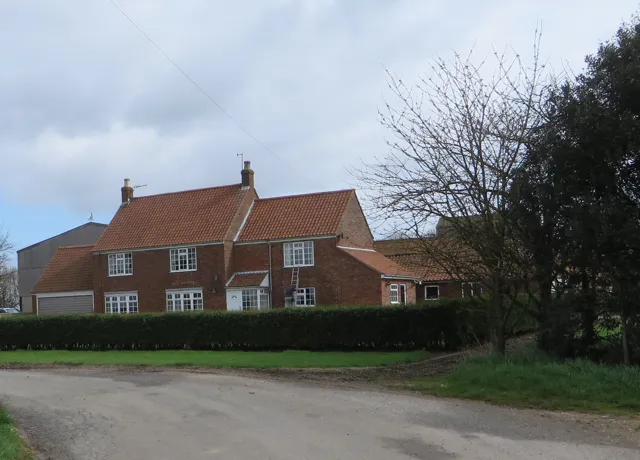
Brown Trails Under the Sill: What Those Marks Are Trying to Tell You

Photo: Anatoly Mikhaltsov, CC BY 4.0, via Wikimedia Commons
Look at the wall under any window in Britain for long enough and you will find a mark. Sometimes it is a faint brown ghost of a trail. Sometimes it is a green smear that has clearly been there since autumn. Sometimes it is a hard, pale crust that looks almost like paint.
Most of it is harmless. Some of it is a message. The trick is working out which before you get the bucket out, because a quick scrub can wipe away the evidence you need to fix the thing that keeps causing it.
First, work out what you are looking at
Before anything gets cleaned, take a photo in good light and look at three things: the colour, the shape, and where the trail starts.
The starting point matters most. A mark that begins at the very top of the window, at the sill line, or at a joint in the wall is telling you where the water came from. A mark that begins somewhere in the middle of the glass and runs sideways is usually just years of rain carrying dust.
The usual suspects, in order of likelihood
Gutter overflow. By far the most common. When a gutter is blocked with moss, leaves or a football, water spills over the back edge and runs down the wall, usually landing somewhere near a window. It picks up silt and roof grit on the way, which is why the trail is brown rather than clear. Look for a corresponding stain on the fascia above.
Render splash. On rendered or pebbledashed walls, rain hitting a sill bounces back up and carries lime and fine aggregate down the wall. It leaves a chalky, pale-brown fan just below the sill. Harmless, but it looks grim and it comes back after every heavy spell.
Tired seals and failed mastic. The bead of sealant around a frame has a lifespan — often ten to fifteen years, less if it faces full sun. When it shrinks or splits, water gets in behind and tracks out at the bottom corner, bringing dirt with it. You will usually see the trail start at a corner rather than across the whole width.
A drainage or gully problem. If the mark is low on the wall, near ground level, or appears alongside damp patches inside, the cause may be further down than the window — a blocked gully, a broken downpipe, or ground levels that sit too high against the brickwork. This is the one worth taking seriously.
Plant tannins and algae. Green along a shaded north-facing wall is algae. Brown streaks near a birch, oak or ivy are often tannins washed out of leaves. Neither is damaging to masonry, but both return annually.
Rusty fixings. Small orange-brown streaks starting at a bracket, hinge or old nail head are exactly what they look like.
Reading the pattern
A few quick diagnostics, all done from the ground:
- Trail starts at the top corner of the frame — suspect the mastic or a gap above the window.
- Trail spans the whole width and starts at the sill — splash-back or overflow, depending on the colour.
- Vertical stripes with clean gaps between them — water is running off specific points, often a gutter joint or a bracket.
- A single concentrated stain with a tide-line edge — something is repeatedly soaking that spot. Worth investigating properly.
- Green, soft and only in the shade — algae, and mostly cosmetic.
Cleaning it without making it worse
Once you have photographed and diagnosed it, and once any repair has been sorted or booked, you can clean. A few rules keep you out of trouble:
- Start dry. A dry cloth or soft brush lifts loose dust and shows you the true extent of the mark.
- Use the mildest thing that works. Warm water with a small amount of washing-up liquid, applied with a soft brush, removes most organic staining.
- Do not bleach render. It can leave a permanent pale patch that looks worse than the original mark.
- Never pressure-wash render or pebbledash. It blasts the surface away and creates a bigger, more porous problem.
- Keep acids and descalers away from anything except glass, and even then only the ones formulated for it.
- Test in a corner first, low down and out of sight, and give it a day to dry before judging.
If the wall is old brick or stone, be gentler still. Soft Victorian brick and lime mortar do not respond well to enthusiasm.
When it's a window job and when it's a trade job
This is the bit people get wrong, and it is not their fault — one brown streak can look like five different problems.
Call a window cleaner when the mark is surface staining on the glass, frames and sills, when it needs reaching above a conservatory or on a first floor, and when it needs clearing without scratching. Cleaning glass properly is a skill, and a good cleaner will also tell you honestly if what they are looking at is not dirt.
Call a gutter firm for blocked or sagging gutters, a roofer for damaged tiles or failed flashing, and a general builder or drainage contractor for cracked render, failed mastic or ground-level damp. A window cleaner can usually point you in the right direction, but the fix is not theirs to make — and any cleaner who offers to reseal your frames or repoint your brickwork without being asked is worth a polite no.
If you rent, put it in writing
Tenants often notice these marks first, and often sit on them, assuming a brown streak is just part of living in an older building. Sometimes it is. Sometimes it is a gutter that has been blocked for three years.
The sensible approach: photograph it, note the date, and email the letting agent or landlord describing where the mark starts and how long it has been there. Gutters and external walls are almost always the landlord's responsibility, while keeping the glass itself clean can be either — check your tenancy agreement rather than guessing.
And do not climb. Tenant or owner, no window is worth a ladder against a sloping path in the rain.
Stopping it coming back
Most of these marks have one cause: water going somewhere it should not. A gutter clear once a year, ideally after the leaves drop, prevents the majority of brown trails on British homes. A quick check of the mastic around your frames every few springs catches the rest before they become a stain.
Clean the wall if you like. Just find out what wrote the message first.